
公儀普請篇
Pax Tokugawana – Redirecting Power to Official Construction –
People Longing for Peace
01
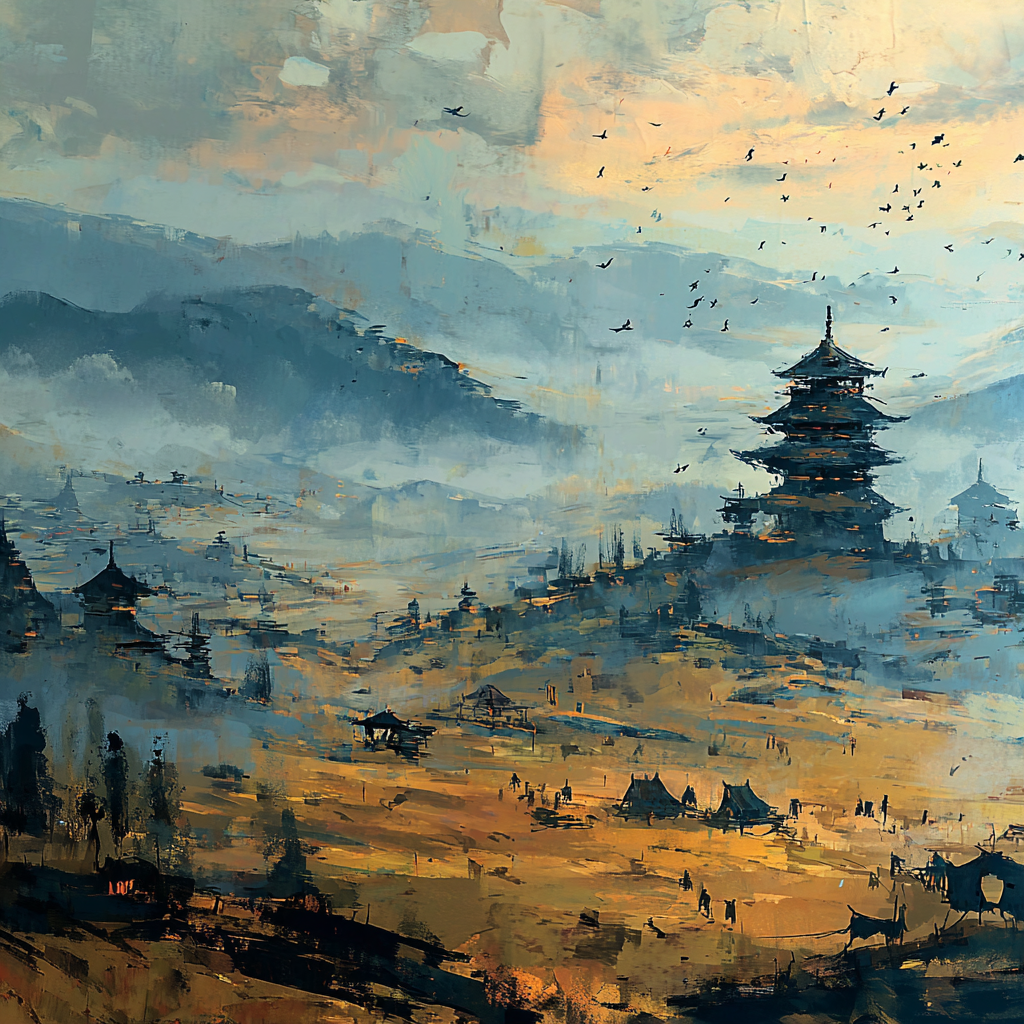
The emperor in Kyoto was respected for a long time, but he had long lacked the power to unite the country by commanding the warriors directly. So, about 560 years ago (late 1400s), local warrior leaders fought over land, and conflict continued. Then, about 480 years ago (1543), European merchants brought guns to Japan. Warfare changed, and fighting often became even more dangerous. People longed for one thing above all: peace and safety in everyday life. This story moves toward where that hope finally takes shape—the birth of Edo.
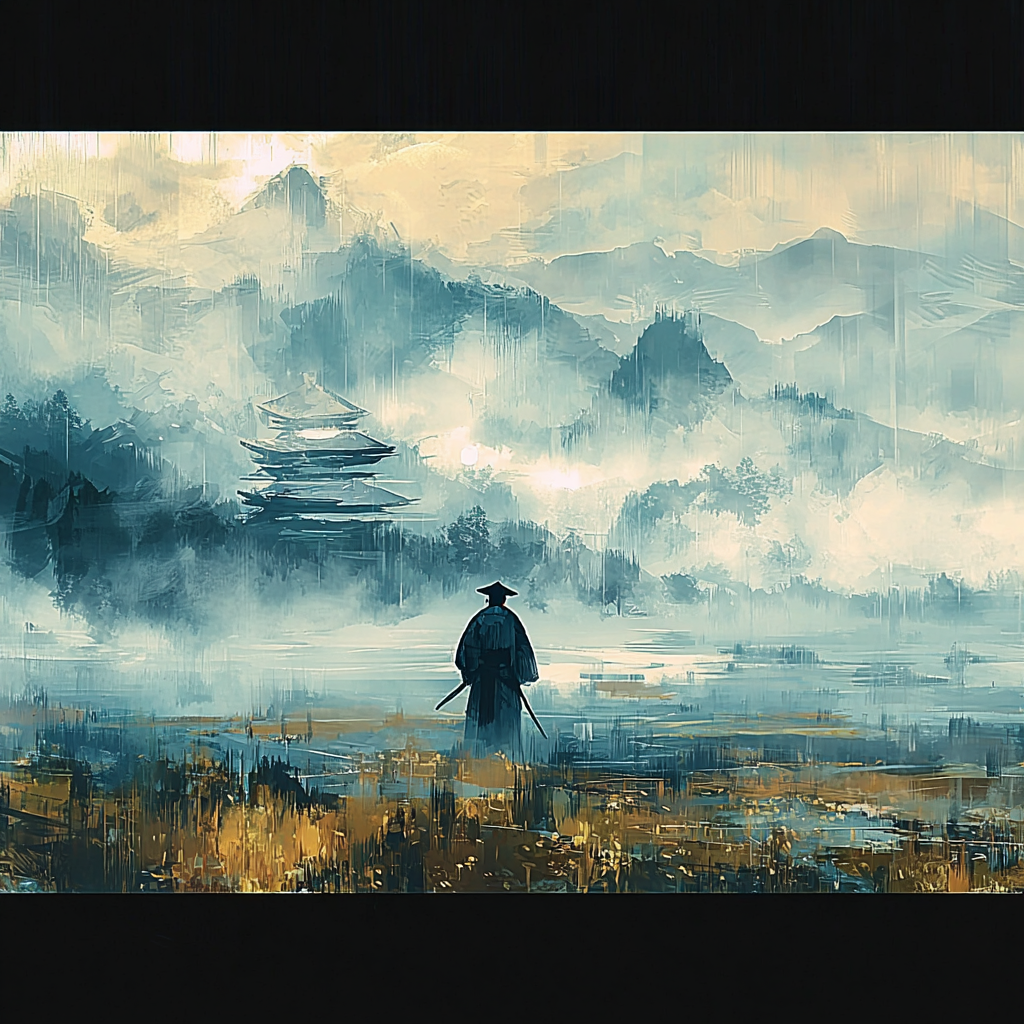
A Samurai Leader Moves East
02
Far to the east of Kyoto, there was a powerful samurai leader. His name was Tokugawa Ieyasu.
Ieyasu was based in the lake town (Hamamatsu), trying to survive in an age of war. But war also brought suspicion into families. Sources say that Ieyasu’s wife and his eldest son were accused of working with an enemy; his wife was killed, and his son was forced to take his own life.
We cannot know exactly what Ieyasu felt. Still, he may have searched for a safer, more stable place—moving farther east into the Southern Mount Fuji region, and eventually to the Mount Fuji-view city (Sunpu).
Farther East—The Marsh Town Edo (Today’s Tokyo)
03
In 1590, power at the center of Japan shifted again. Tokugawa Ieyasu was ordered to move his base farther east, away from Kyoto. Whether this was strategy, caution, or political balance is still debated—but the result was clear.
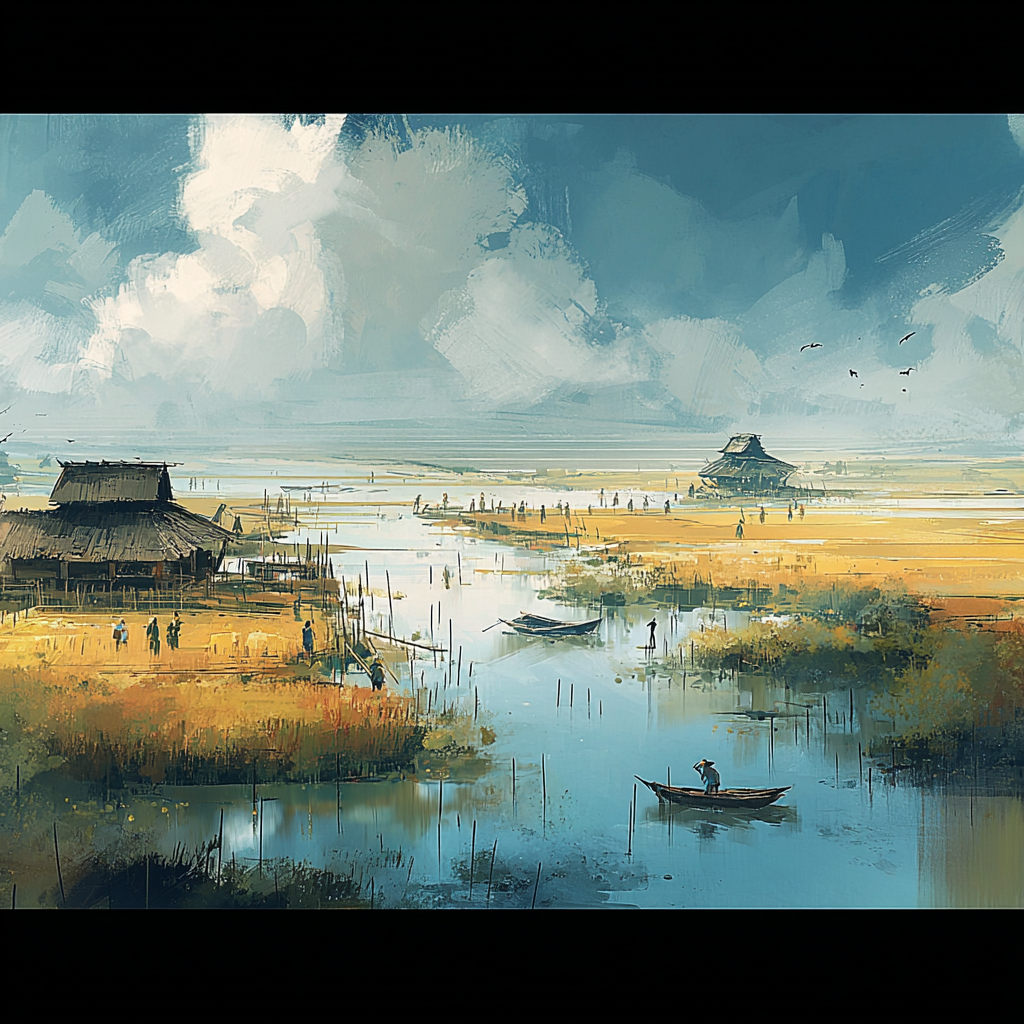
Ieyasu was sent to Edo, a marshy settlement of inlets and wetlands. It was a small fishing town, shaped by water and mud, far from the image of a great capital. Yet this unpromising place would soon become the stage for a new experiment: building a city not for war, but for lasting peace.
Building a City for Peace — Redirecting Military Power into Creation
04
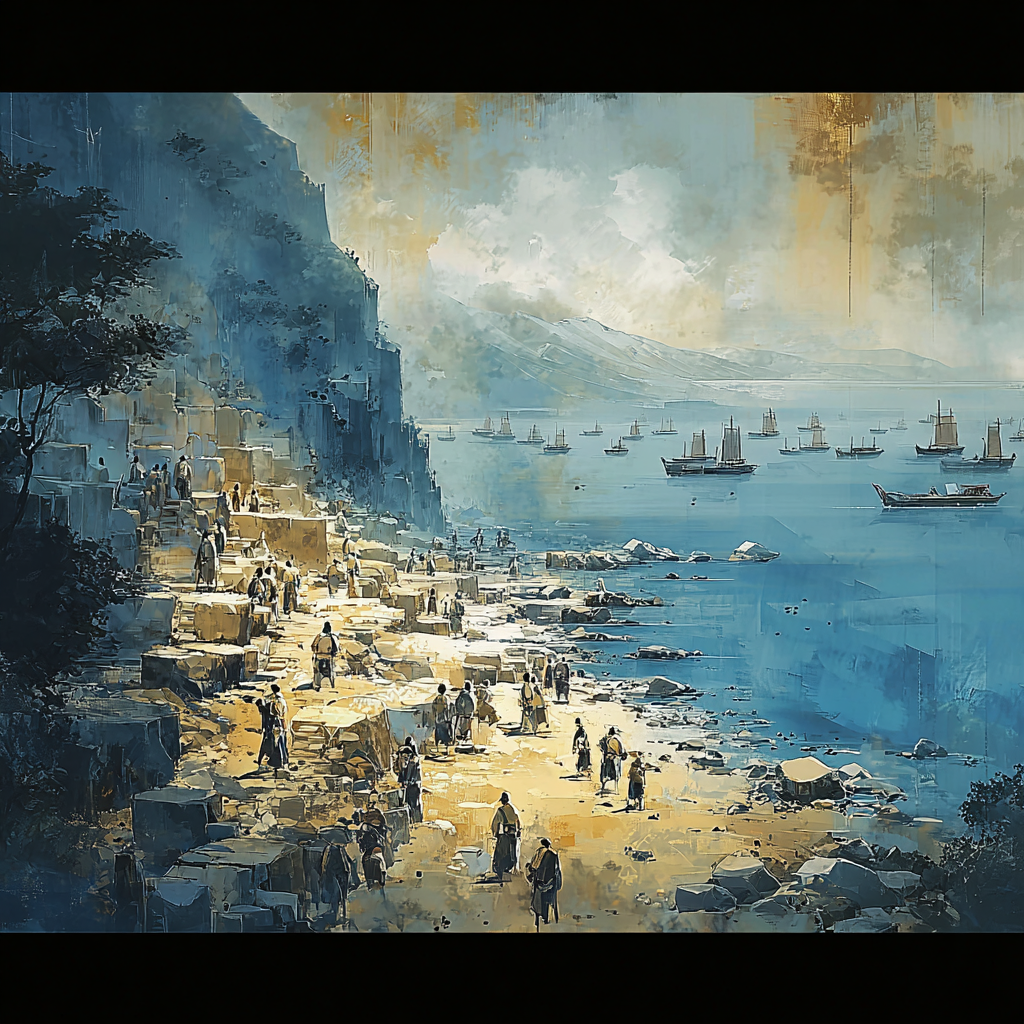
Far to the east of Kyoto, in the marshlands of Edo (today’s Tokyo), city-building for peace began. After unification, the shogunate redirected remaining military power into creation.
Moats and waterways were shaped, and stone and other materials were shipped by boat from Izu and beyond, turning Edo into a water-transport city—often compared to Amsterdam. Western shipbuilding knowledge also entered Japan; William Adams (Miura Anjin) is said to have supported shipbuilding in the Izu region.
Even today, stories remain of materials “crossing the sea” to build Edo—military force transformed into productive power.
Archaeology & Evidence
Recent excavations and material studies inform this project.
Historical Research
Built on verified records and academic scholarship.
Field-Based Perspective
Places and routes you can still visit today.
After Story
Gardens Born from City-Building
After Edo Castle was built, the skills developed for city construction did not disappear.
Techniques for controlling water—moats, canals, and drainage—were adapted into garden design.
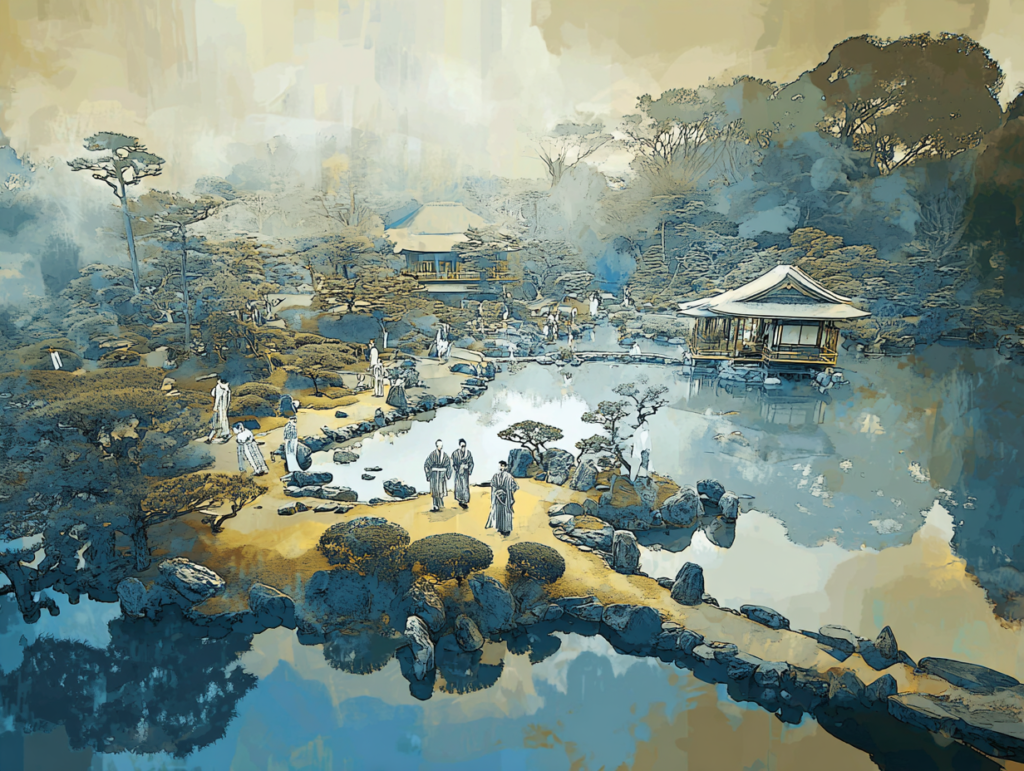
Unlike Kyoto’s dry rock gardens, eastern Japan’s gardens used flowing water and ponds, shaped by the same engineering that had supported castle building.
In this way, daimyo strolling gardens emerged as a distinctive garden culture of eastern Japan—born from construction, not conflict.