


The East Izu Area, encompassing Atami, Itō, and Higashi-Izu, forms a critical material and geological foundation of the Shogunate to Tokyo Trail. Rich in volcanic stone resources and shaped by dynamic geothermal activity, this region supplied both the physical materials and natural energy that supported the construction and maintenance of Edo as a shogunal capital.
Historical Background
The historical significance of the East Izu Area is closely tied to its role as a major stone-producing region during the early modern period. The rugged volcanic landscape of the Izu Peninsula yielded high-quality andesite and related stones that were extensively quarried for use in large-scale construction projects, most notably the stone walls and infrastructure of Edo Castle. These quarries were worked by samurai-led domains under the Tokugawa regime, embedding the region directly within the political economy of shogunal rule.
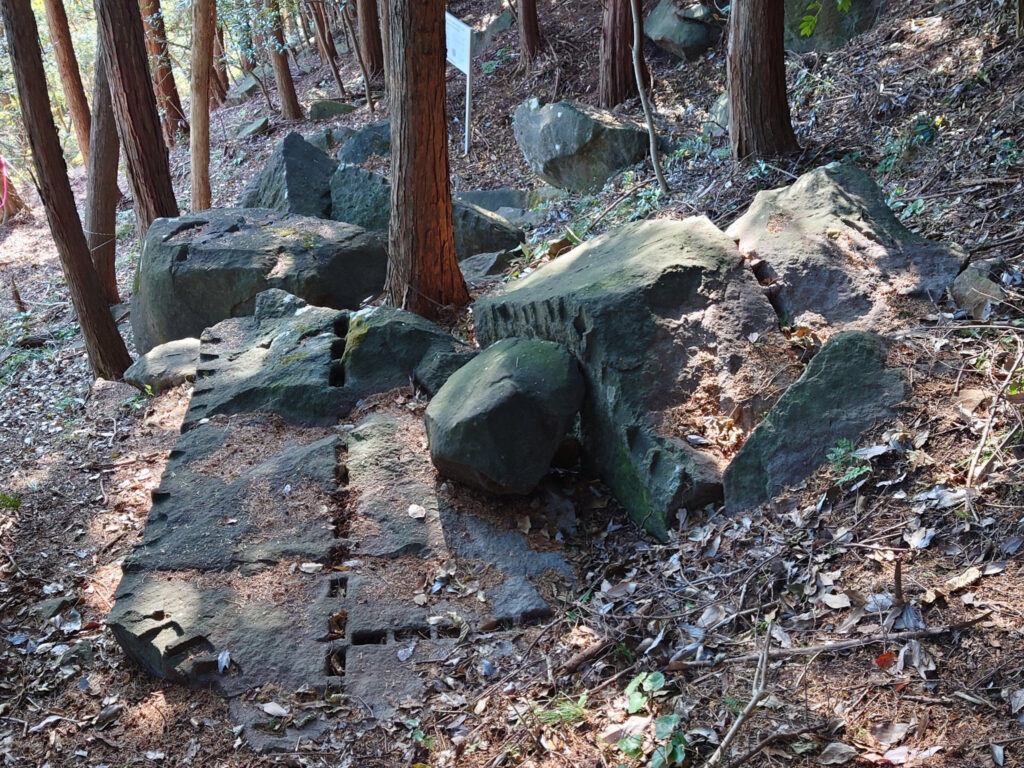
Stone-cutting sites scattered across the forests and coastal hills of East Izu bear visible traces of this activity. Unfinished blocks, chisel marks, and partially extracted stones remain in situ, offering rare material evidence of the labor processes that underpinned Edo’s monumental architecture. These landscapes function today as open-air archives, preserving the intersection of geology, craftsmanship, and political power.
Beyond stone production, the East Izu Area is defined by intense geothermal activity. Hot springs, formed through volcanic processes, have been used since antiquity and flourished during the Edo period as sites of healing, rest, and circulation along coastal and inland routes. Atami and Itō, in particular, developed as important thermal destinations frequented by samurai, officials, and later the urban population of Edo, linking bodily well-being to the broader networks of movement and governance.
The region’s geological character has also been recognized in contemporary terms as geoheritage. Cliffs, lava formations, and coastal terraces illustrate the volcanic forces that created both the stone resources exploited by the shogunate and the dramatic landscapes that continue to define East Izu today. In this sense, natural history and human history are inseparable.
Within the Shogunate to Tokyo Trail, the East Izu Area occupies a unique position as a zone where raw material extraction, skilled labor, and natural energy converged. It represents the hidden yet indispensable hinterland of Edo—where stone was cut, landscapes were transformed, and the physical foundations of Japan’s early modern capital were forged.