
Edo Tokyo
A global city at the far east that began development 400 years ago
The city of Edo-Tokyo also has a 400-year history
01
At first glance, Tokyo appears to be a modern city lined with skyscrapers. However, the city actually has a 400-year history of development. Kyoto and Osaka were once the centers of Japan, home to the Emperor. With the start of the Shogun era, the city began to develop through large-scale construction projects, and grew while avoiding conflict, eventually becoming a megalopolis with one of the world’s largest urban populations by the 1950s. In contrast to Kyoto’s wooden culture, Edo, located in the swampy region, developed as a culture based on flood control, maritime transport, and earthen and stone construction.
The Imperial Palace watches over visitors in front of Tokyo Station
02
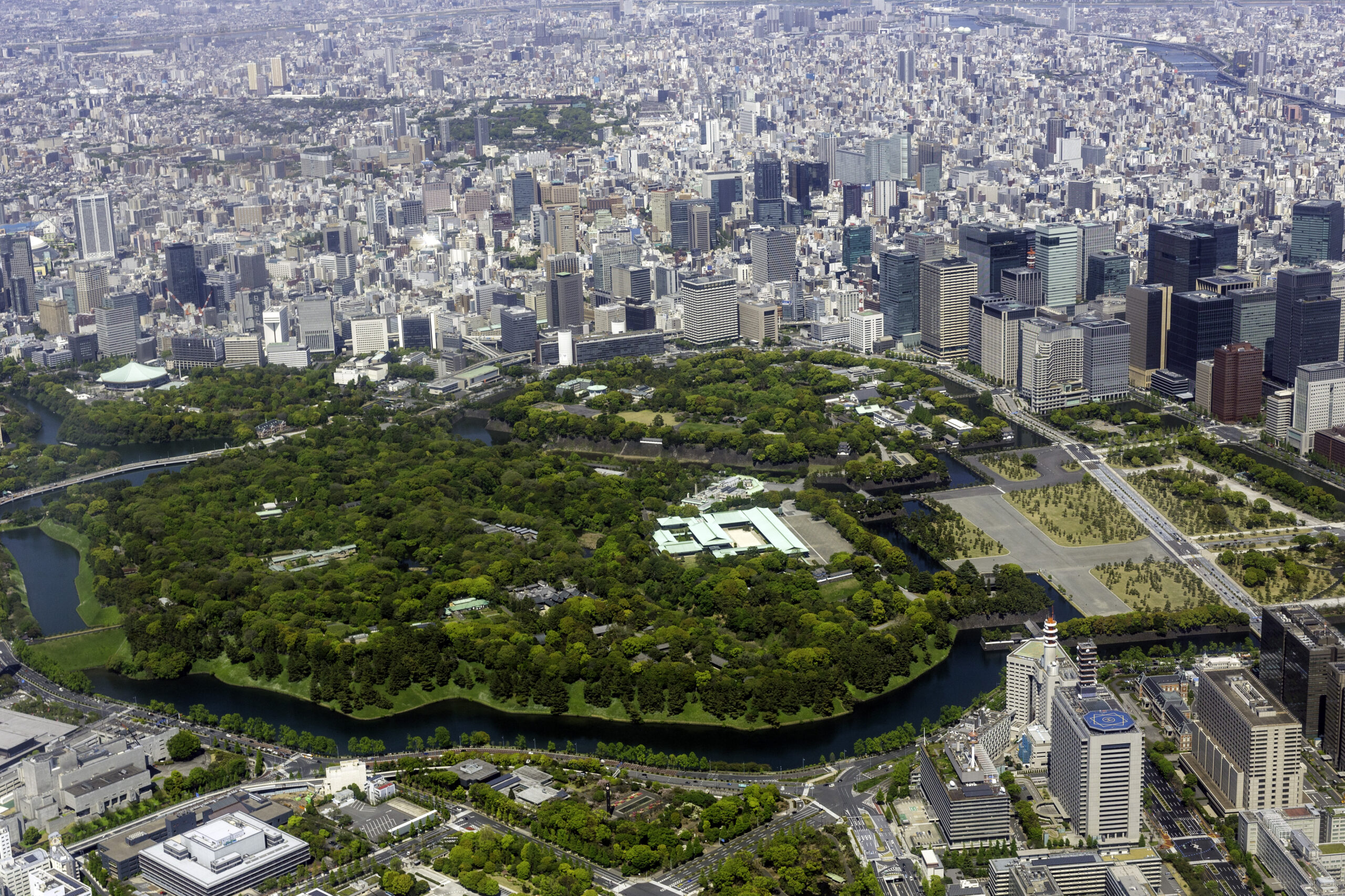
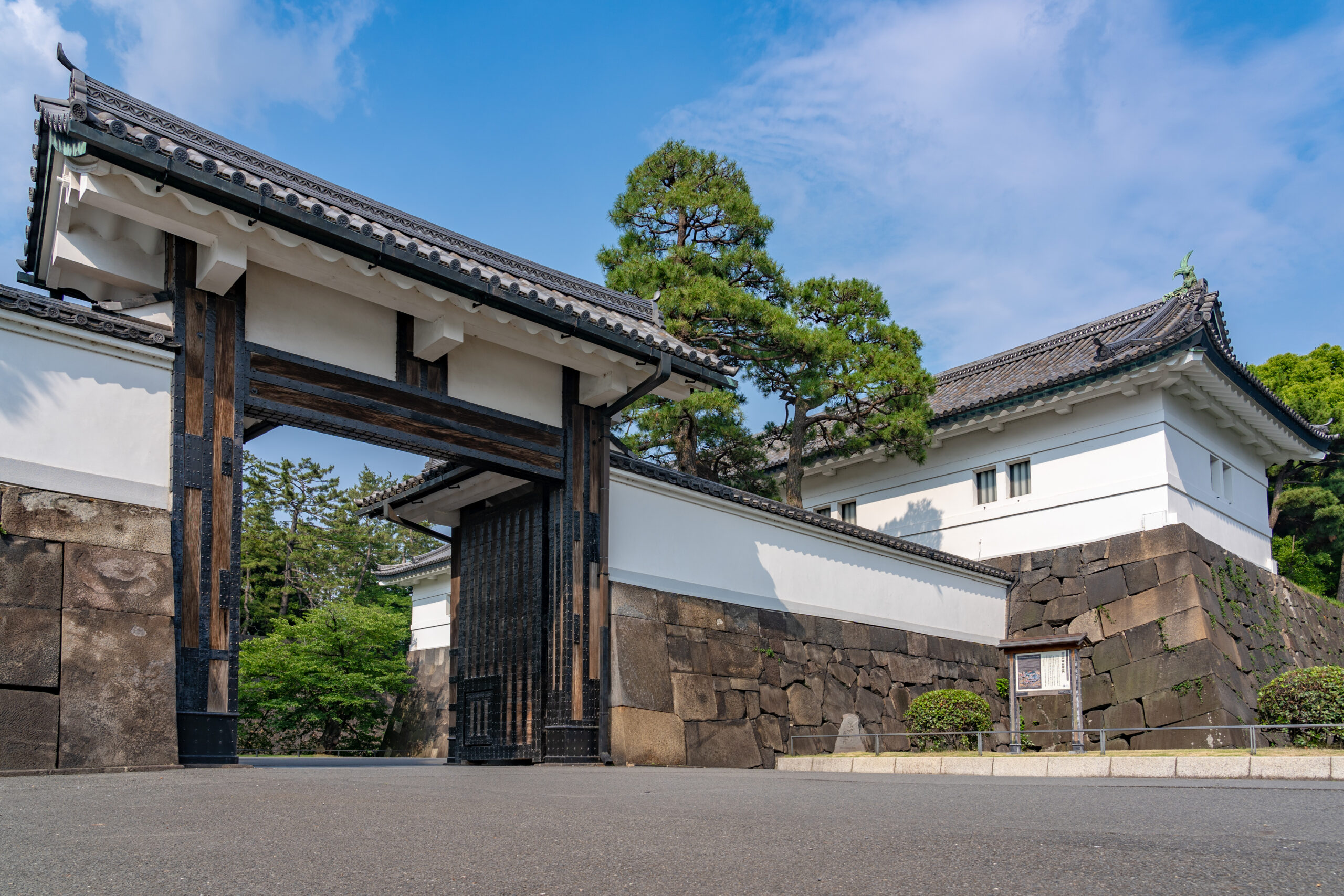
When you get off at Tokyo Station and go outside the Marunouchi Gate, you will see the business district unfolding before you. Further beyond that, suddenly in the middle of the city, you will find the Imperial Palace. The place that the last Shogun surrendered for the Emperor is the inner citadel of Edo Castle, where the Edo Shogun and his retainers once conducted politics. Part of the vast Imperial Palace is open to the public as a park. When you get off at Tokyo Station, be sure to take a stroll through the heart of Japan.
Marunouchi, the heart of Japanese business
03
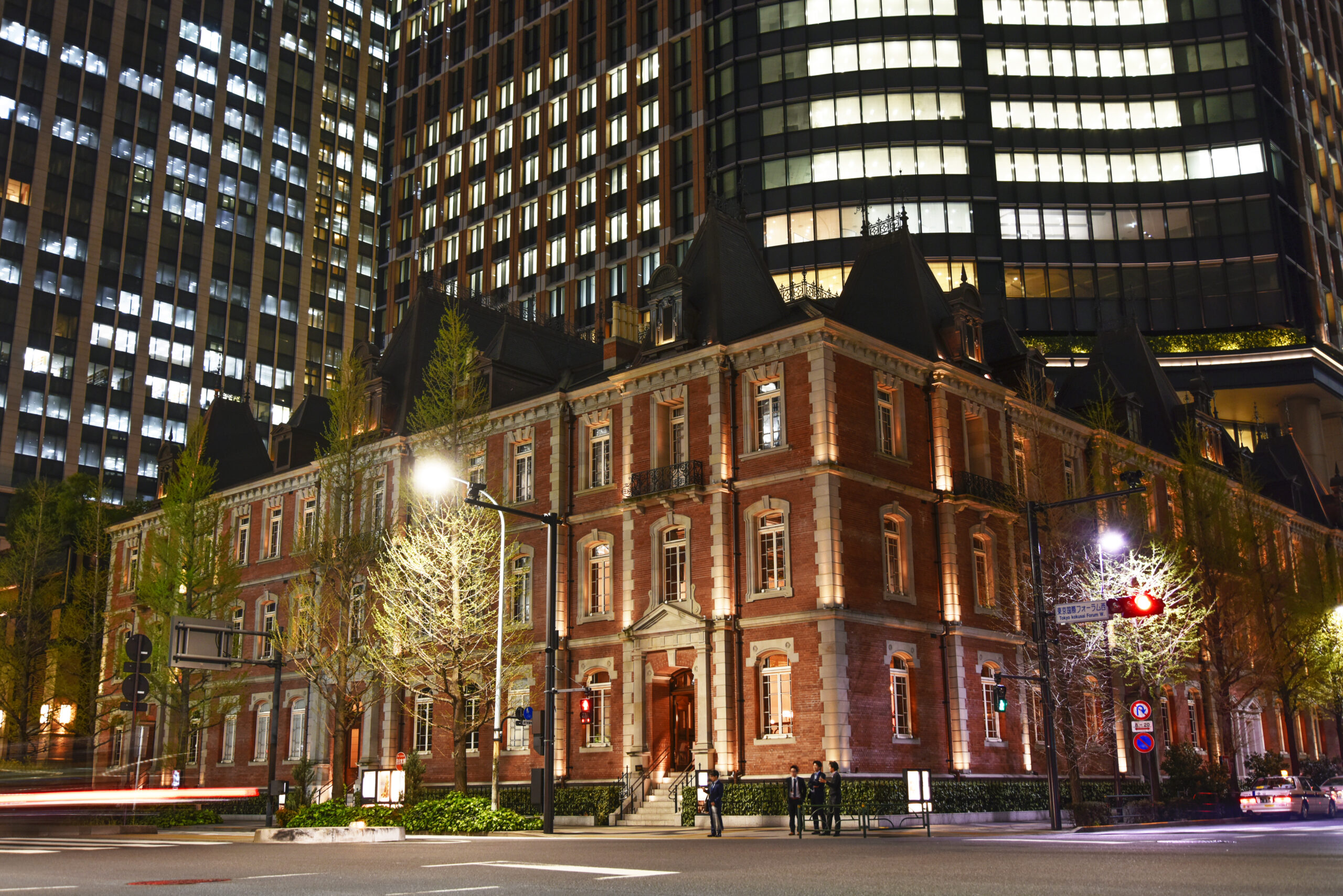
Exiting the Marunouchi Exit of Tokyo Station leads you to the Marunouchi area, the heart of Japan’s business district. During the Edo period in the 1600s, the Marunouchi/Otemachi area was a samurai town lined with feudal lord residences. Before the Edo period, this area was covered by shallow seawater, but with the start of the Edo period, powerful feudal lords ordered to build Edo reclaimed the land and built vast estates there. From around 1890, an international brick and stone business district was constructed. The Ukiyo-e Museum in the Mitsubishi Ichigokan building exhibits ukiyo-e prints of the townscape from that time.
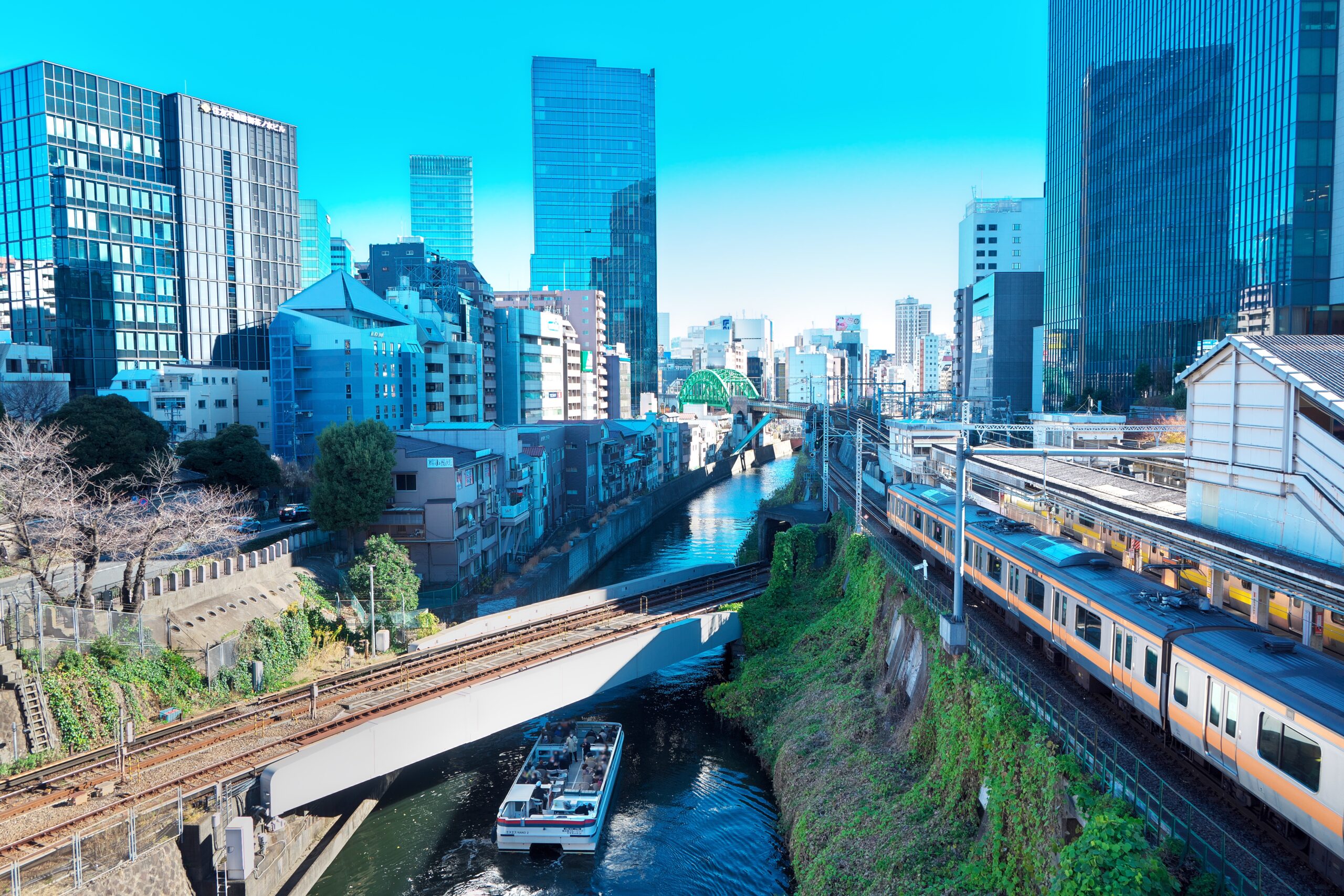
A canal surrounded by spiral stone walls
04
The city of Edo was crisscrossed by spiral canals, centered around Edo Castle and the Imperial Palace, through which ships and materials passed. Stone from the Shigeno Peninsula was needed as piling stones for the construction of these canals. Although some parts are now hidden by large buildings, you can take a boat tour of the canals on the Kanda River Cruise. Tokyo is still built on Edo’s canals. The outer wall covers an area of approximately 2,082 hectares and was a symbol of the authority of the Tokugawa Shogun.
From the Maritime Era to the Railway Era
05
Richard Henry Brunton, who pioneered Western civil engineering and architectural techniques in Japan with the construction of a lighthouse in Shimoda, Izu, later completed the modernization of the foreign settlement in Yokohama. However, Yokohama was a long way from Tokyo. He proposed building a railway to connect Yokohama’s foreign quarter with central Tokyo. In 1872, the line between Yokohama Station and Shimbashi Station opened. Large quantities of stone were transported from the quarries on the Shigeno Peninsula that Brunton discovered. Today, the original Shimbashi Station has been reconstructed and is the Railway Museum.
-scaled.jpg)
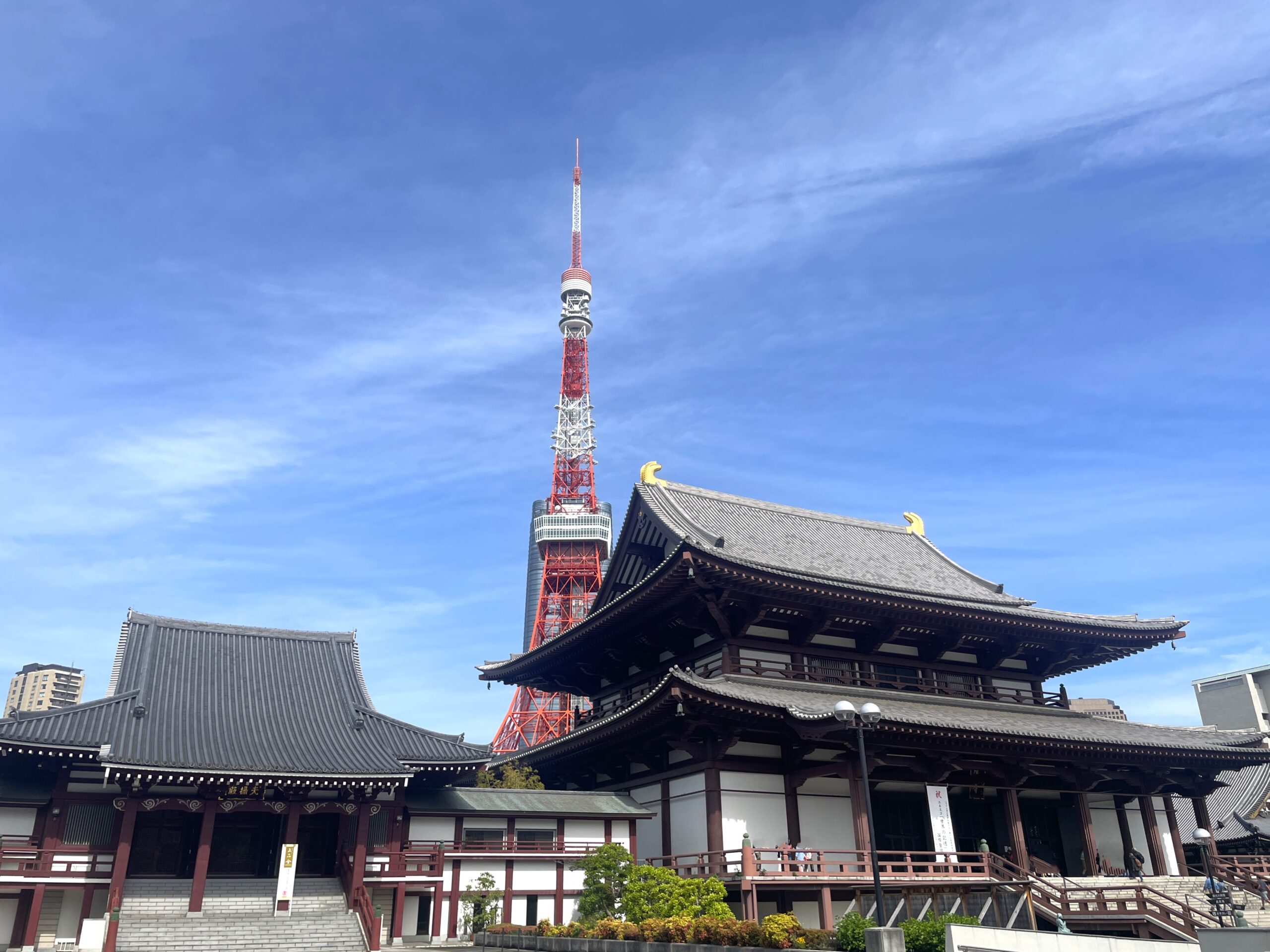
The tower that symbolizes Tokyo and the shoguns who rest beneath it
06
Tokyo Tower, along with Tokyo Skytree, is a symbol of Tokyo’s development. Beneath it stands a temple associated with the Shogun family: Zojoji Temple. Shortly after Tokugawa Ieyasu began ruling the Kanto region, Zojoji Temple was chosen as the family temple of the Tokugawa family. Zojoji Temple houses the graves of six Shoguns: the second Shogun Hidetada, the sixth Shogun Ienobu, the seventh Shogun Ietsugu, the ninth Shogun Ieshige, the twelfth Shogun Ieyoshi, and the fourteenth Shogun Iemochi.
Archaeology & Evidence
Recent excavations and material studies inform this project.
Historical Research
Built on verified records and academic scholarship.
Field-Based Perspective
Places and routes you can still visit today.