
無血開城篇
Modernization – Tokyo Steps into the World, Not in Flames –
Black Ships in Edo Bay — A Shock from the Sea
01
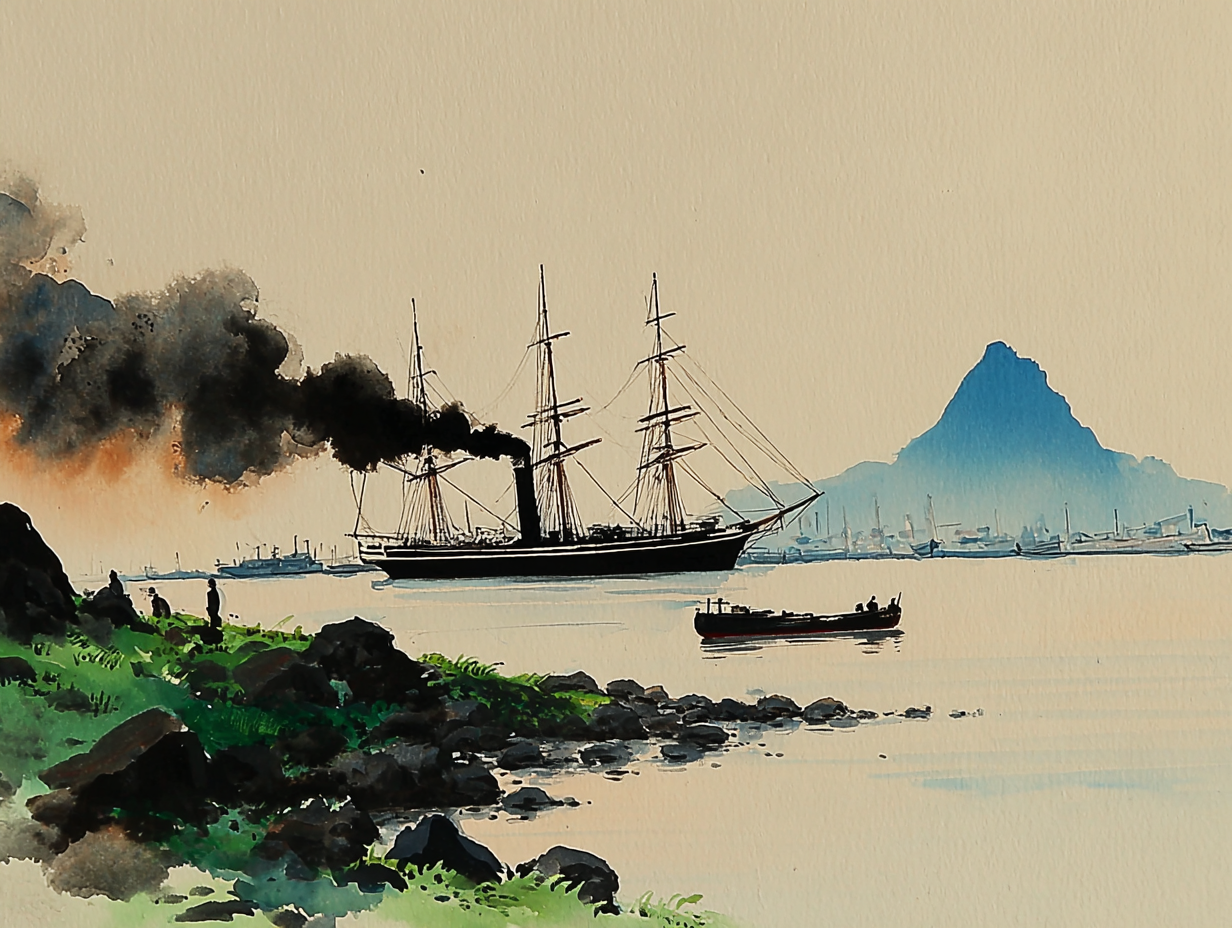
About 170 years ago (1853), strange black ships entered Edo Bay. They moved with steam and sent up thick smoke, unlike the wooden boats people knew. For many in Japan, it felt as if the outside world had suddenly come right to their doorstep.
The arrival brought fear and confusion—but also a hard question: how could the country protect its people and face the world without war? The long peace that began in Edo was now being tested. And the story of Edo turning into Tokyo begins here.
東京都立中央図書館蔵-scaled.jpg)
Two Harbor Test Cities — Building Towns for Foreign Visitors
02
After the shock of the Black Ships, coastal towns became Japan’s gateway to the outside world. In places like Shimoda and Yokohama, people had to prepare quickly to receive foreigners and handle new rules, new trade, and new ways of living—without turning ports into battlefields.
What followed was like a real-life experiment in city making. Stone-cutting and stone building met white plaster walls, and a new kind of streetscape began to appear. From these harbors, Japan started to open a path toward the wider world.
The Day Edo Became Tokyo — The Young Last Shogun’s Decision
03
After the two harbors made it real to move forward with acceptance and negotiation while avoiding conflict with foreign powers, Japan faced another danger at home: the approach of civil war.
The former shogunate held Edo, while the new government gathered in Sunpu (Shizuoka), the town with views of Mt. Fuji. As military advance and political negotiation unfolded at the same time, tension rose to its limit.
At this turning point stood the last shogun, still a young leader in his early thirties. Facing the risk that civil war could set Edo in flames, he chose to hand the city over. Envoys were sent to the new government in Sunpu, and a path was sought to keep the capital from becoming a battlefield.
Through this agreement, the Emperor entered Edo Castle, and “Edo” became “Tokyo.” The former shogun later returned to Sunpu, where he spent the rest of his life quietly in the town beneath Mt. Fuji.

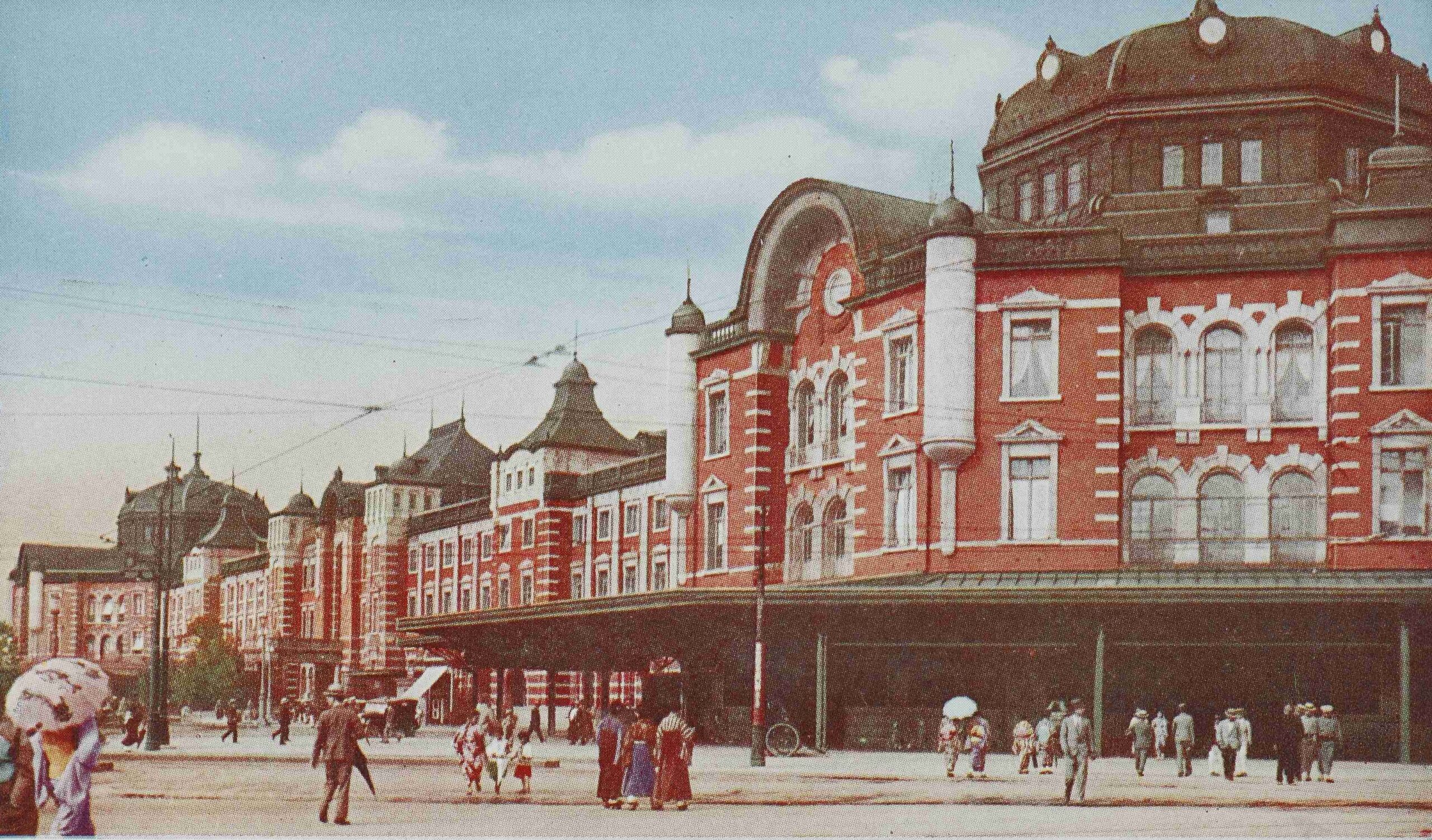
A New Tokyo in Stone and Brick — Building a City the World Could Recognize
04
Tokyo began to regain stability—without civil war at home and without war with foreign powers. Yet the next task was larger: to grow into a capital that could connect with the wider world. Japanese and foreign people worked in parallel, and architects and civil engineers trained in foreign techniques helped lead the transformation.
Techniques tested in the two “harbor experiment cities” were applied to the building of Tokyo. As materials such as stone and brick spread through new projects, the city’s economy expanded at a new scale. In this way, Japan showed that a modern capital in Asia could take its place in the international world—open, functional, and recognizable beyond its borders.
Archaeology & Evidenc
Recent excavations and material studies inform this project.
Historical Research
Built on verified records and academic scholarship.
Field-Based Perspective
Places and routes you can still visit today.
After Story
From Sword to Tea — Peace in Sunpu
After the bloodless transition, the last shogun spent his later years in Sunpu.
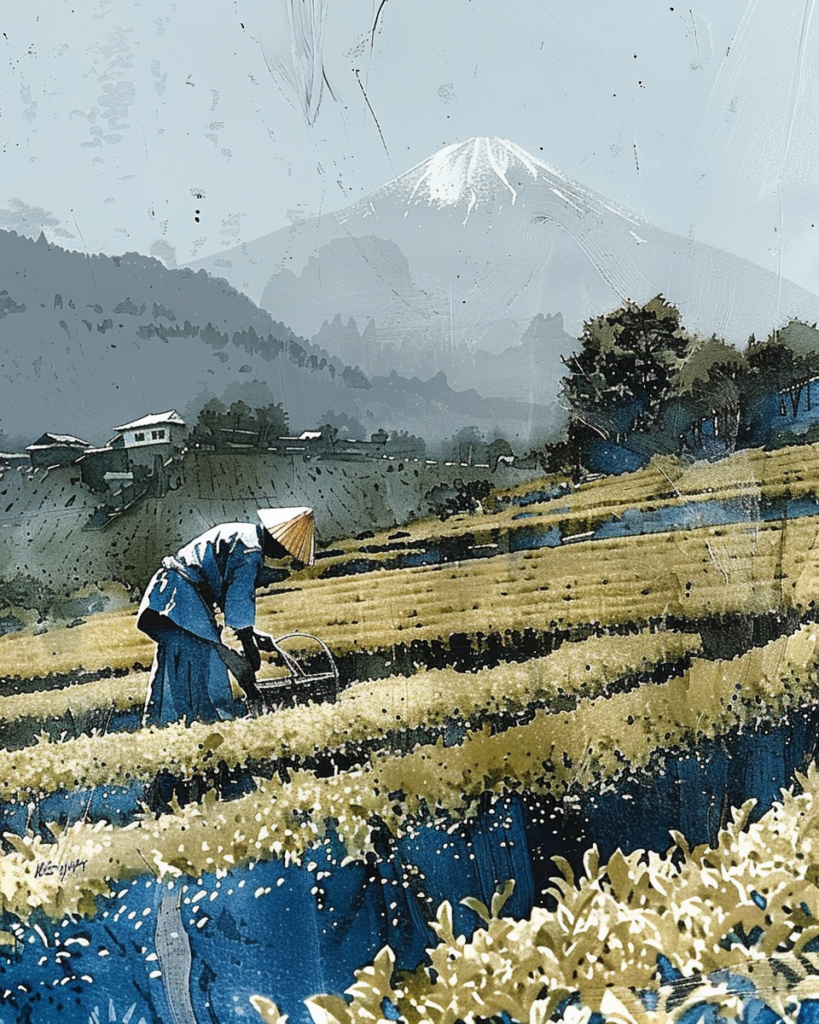
Many samurai followed a similar path—setting aside their swords and turning to cultivation.
In the fertile lands around Mount Fuji, former warriors picked up hoes and baskets, growing tea instead of fighting wars.
This peaceful shift laid the foundation for Shizuoka’s tea culture, which remains world-famous today—a living legacy of a society that chose creation over conflict.